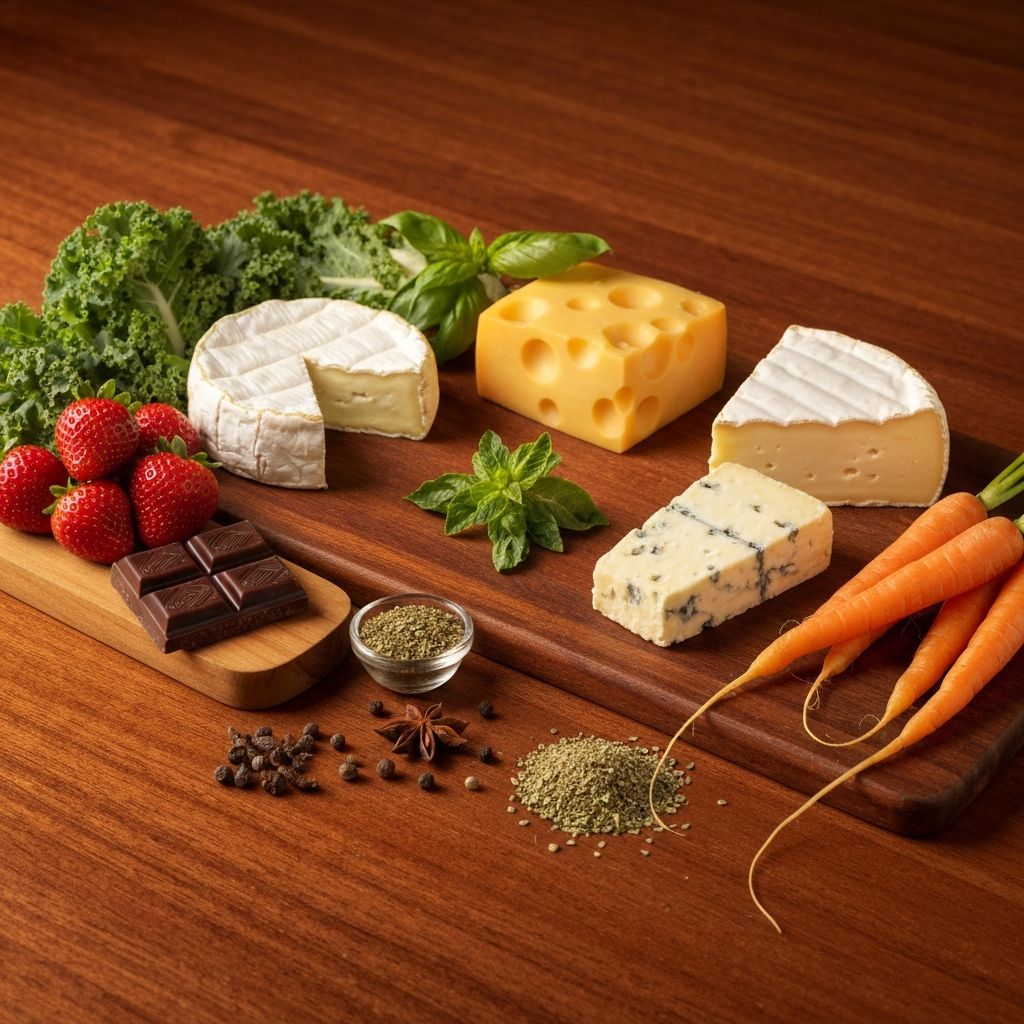
Understanding Nutritional Density
High-quality ingredients possess characteristics that distinguish them in terms of nutritional composition, bioavailability, and sensory properties. While "quality" encompasses multiple dimensions, from an nutritional perspective, quality ingredients typically offer concentrated micronutrients, beneficial phytochemicals, and superior macronutrient profiles compared to more processed alternatives.
Nutritional density refers to the concentration of nutrients relative to caloric content. Nutrient-dense foods provide substantial micronutrients (vitamins, minerals, phytochemicals) and/or quality macronutrients while maintaining moderate caloric density. Many gourmet ingredients exemplify this principle.
Bioavailability and Absorption
Beyond containing nutrients, quality ingredients often feature superior bioavailability—the proportion of consumed nutrients actually absorbed and utilized by the body. Several factors influence bioavailability:
- Food matrix: The structural arrangement of nutrients within foods affects absorption efficiency
- Processing methods: Gentle preparation preserves delicate nutrients and potentially enhances bioavailability
- Fermentation: Fermented foods often feature enhanced nutrient availability through enzymatic processes
- Nutrient synergies: Particular nutrient combinations enhance mutual absorption
Truffles and Bioactive Compounds
Truffles, highly prized in gourmet cuisine, represent an interesting example of quality ingredients with distinct metabolic properties. These subterranean fungi contain unique polysaccharide structures and aromatic compounds recognized by contemporary research for potential bioactive properties.
Truffle polysaccharides demonstrate various biological activities in research contexts, including immune-modulating and antioxidant properties. The distinctive aroma of truffles derives from volatile compounds that activate olfactory pathways and can influence appetite and satiation signaling. However, truffles should be understood as contributing to overall nutritional patterns rather than representing "metabolic" food with special properties.
Artisanal Cheeses and Protein Quality
Artisanal cheeses represent quality ingredients offering distinctive nutritional profiles. Aged cheeses develop complex amino acid profiles through proteolysis (protein breakdown) during fermentation. These broken-down proteins and free amino acids offer several advantages:
- Digestibility: Partially broken-down proteins require less digestive effort
- Flavor intensity: Free amino acids and peptides create umami and complex flavor experiences
- Bioavailability: Fermentation can enhance mineral bioavailability through reduction of antinutrients
- Microbial diversity: Living cultures in artisanal cheeses provide probiotics and potentially beneficial metabolites
The umami taste sensation derived from aged cheese—produced by glutamate and nucleotides—activates satisfaction responses that can support satiation signaling.
Fermented Foods and Gut Health
Many gourmet ingredients involve fermentation, a process that fundamentally transforms nutritional profiles and creates novel bioactive compounds. Fermented foods contain:
- Living microorganisms: Beneficial bacteria that may support gut microbiota diversity
- Bioactive metabolites: Short-chain fatty acids, vitamins, and other compounds produced through fermentation
- Enhanced nutrients: Some nutrients become more bioavailable through fermentation
- Enzymes: Microbial and fungal enzymes that support digestion
Emerging research suggests that gut microbiota composition influences energy homeostasis, satiation signaling, and metabolic processes. Fermented foods may contribute to favorable microbiota profiles through multiple mechanisms.
Flavor Complexity and Sensory Satiety
One distinctive characteristic of gourmet ingredients is their complex sensory profiles. These ingredients activate extensive taste and smell pathways, engaging sophisticated neural networks related to flavor processing and reward.
Sensory-specific satiety describes the phenomenon where appetite decreases more rapidly when experiencing single, simple flavors compared to diverse, complex flavor profiles. Paradoxically, complex flavors can promote fuller sensory engagement while supporting stronger satiation responses. The brain's reward centers, when fully engaged through rich sensory experiences, may produce clearer fullness signals.
Micronutrient Density in Gourmet Ingredients
Many gourmet ingredients demonstrate exceptional micronutrient density:
Nuts and Seeds
Gourmet nuts and seeds contain concentrated minerals (zinc, magnesium, copper), beneficial fats, and phytochemicals. Their nutrient density supports satiation through multiple mechanisms—protein content, fat content, and mineral signaling all contribute to fullness.
Wine and Polyphenols
Fine wines contain diverse polyphenolic compounds from grape skins and oak aging. These phytochemicals demonstrate various biological activities, including antioxidant and anti-inflammatory properties. Moderate wine consumption provides these compounds with minimal caloric density.
Herbs and Spices
Gourmet culinary herbs and spices represent concentrated sources of bioactive compounds. Beyond flavor, these ingredients contribute antimicrobial, anti-inflammatory, and antioxidant properties. Their potency means that flavorful dishes can be created with minimal salt and added fats.
Flavor, Satisfaction, and Metabolic Signals
An often-overlooked aspect of ingredient quality involves its relationship to satisfaction and metabolic signaling. Highly palatable, intensely flavored foods can reduce the volume of food required to achieve satiation. This principle suggests that quality ingredients—through their flavor density—may support consumption of smaller portions while maintaining strong satisfaction.
Furthermore, sensory richness engages brain regions involved in reward and pleasure more completely, potentially reinforcing the connection between eating and satisfaction. This engagement may support conscious eating and alignment with internal hunger-fullness signals.
Practical Implications
Understanding the nutritional science of gourmet ingredients suggests several practical principles:
- Ingredient quality contributes to overall nutritional value independent of preparation method
- Complex flavors may support satiation and conscious eating patterns
- Fermented and aged ingredients offer distinct nutritional advantages
- Micronutrient density supports various metabolic functions
- Portion size can be modest when consuming nutrient-dense, flavorful ingredients
Conclusion
Gourmet ingredients represent more than culinary preferences—they embody nutritional sophistication through high micronutrient density, enhanced bioavailability, and complex sensory profiles. Understanding these dimensions provides context for appreciating how refined cuisine aligns with contemporary nutritional science while supporting enjoyable, satisfying eating experiences.
Information Disclaimer: This article presents educational information about nutritional science. It does not constitute medical advice and should not replace professional consultation. Individual nutritional needs vary significantly, and personal decisions regarding nutrition should involve qualified healthcare professionals.